

A rollout is a logistics problem wearing an IT costume
The technical work at each site is usually straightforward. What breaks programmes is everything around it: kit that arrives before anyone can receive it, a site that is not ready, an installer without the configuration, and a wave plan that nobody updates when three sites slip.
We run deployment as a managed programme with a single PMO, per-country delivery leads, and every site tracked as an object in Cogent OS from survey through acceptance. Kit is kitted and staged at the nearest of our nineteen owned hubs and timed to arrive with the installer, not weeks ahead into a stockroom.
Because the workers are ours, the standard is ours. The same install runbook is applied in Turin, Kuala Lumpur and Las Vegas, and the evidence pack for site 4 looks identical to the one for site 340.
Five deployment domains
Grouped by what the work actually demands rather than by product category - because a Starlink install and a laptop refresh need different skills, tools and permits.
EUC estates
Device refreshes and new deployments at scale, staged and imaged before they leave our hub so the on-site task is handover rather than build.
Network estates
Switch, access point, router and firewall deployment with structured cabling, delivered around the site's operating hours.
Specialised connectivity
Where the site has no usable circuit or needs resilient backup - satellite and SD-WAN edge, installed and activated.
IoT & industrial devices
Devices that live outside the office: scanners, sensors, panels and ruggedised terminals, often in environments needing permits.
Kiosks, signage & white-glove
Public-facing and executive installs where presentation and discretion are part of the deliverable.
Eight stages, repeated per wave
The methodology is deliberately boring. A pilot proves the runbook, then every wave runs the same way with the same evidence, so variance comes from sites rather than from method.
What makes a forty-country rollout survivable
| MECHANIC | HOW IT WORKS | WHY IT MATTERS |
|---|---|---|
| Single PMO | One programme manager owns the plan, the risk log and the weekly report across all regions | One version of the truth; no reconciliation between regional suppliers |
| Per-country delivery leads | A named Cogent lead in each country owns site readiness, workers and local escalation | Local language, local calendar, local employment - without losing central control |
| Importer of record | The in-country entity imports and clears equipment into local hub stock | Kit is not stranded in customs while a wave waits |
| Site readiness gating | Each site passes a readiness check - power, containment, access, contact - before it enters a wave | Failed visits are prevented rather than reported |
| Local-language workers | Workers attend in the language of the site, briefed on local access etiquette | Site staff cooperate; visits complete first time |
| One reporting pack | Weekly progress by country and wave, defect log, and evidence links, in one document and the portal | Steering committees see the same numbers as the delivery team |
Where a country falls outside our nineteen entities, we serve it from the nearest one and state the implications for lead time and parts during planning rather than after a slip.
The hubs do the heavy lifting
Pre-staging is the single biggest lever on rollout cost. Every hour of build, imaging or configuration moved from a client site into one of our hubs is an hour off the critical path and out of the site's operating day.
Kit is received into the in-country hub, imaged and configured to your standard, asset-tagged, labelled per site and boxed as a complete site kit including consumables and spares. Hot spares are held per wave so a dead-on-arrival unit does not become a return visit, and displaced equipment travels back through the same hub into refresh or certified ITAD.
Because stock, serials and movements live in the same platform as the work orders, the programme report can state exactly what is staged, what is in transit and what is installed - at serial level, not as a percentage estimate.
What the weekly pack shows
A delivered programme
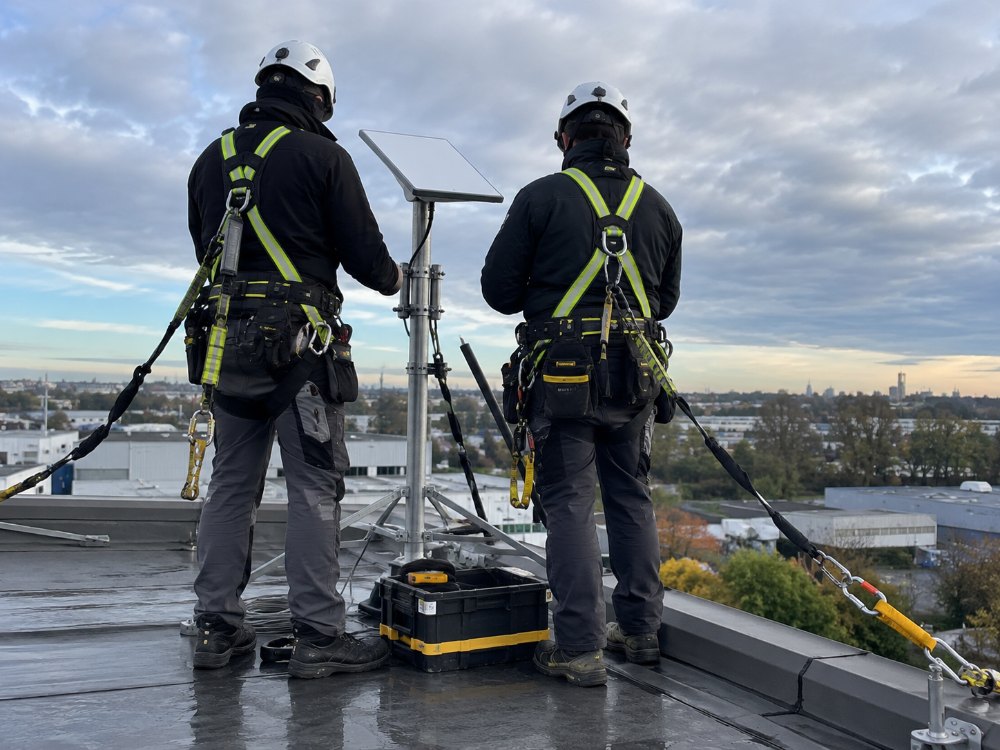
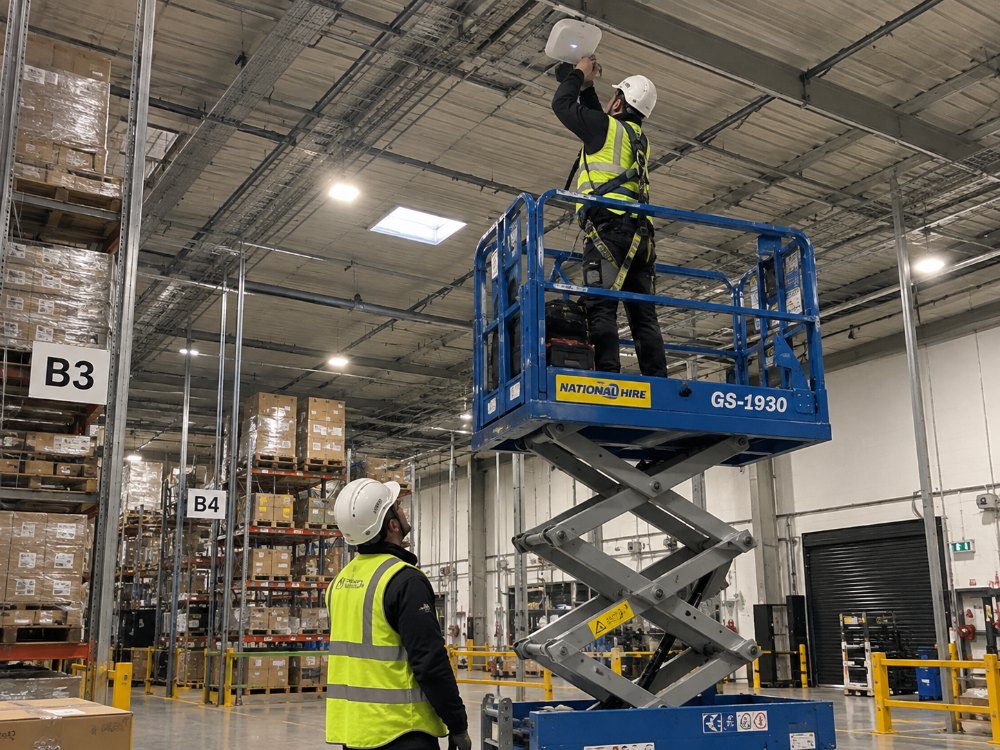
A European enterprise needed antennas and wireless access points installed across 130 locations - a physical rollout involving mounting, cabling, alignment and activation at every site, delivered without disrupting live operations.
We ran it as a wave-based programme on Cogent OS: each site surveyed and scheduled, kit staged and labelled per location from our hubs, and directly-employed workers dispatched with the mounts, cabling and tooling the job sheet specified. Every install closed with the device powered, connected, tested and evidenced - photos, serials and a signed worksheet against the site record.
All 130 locations were delivered on schedule with not a single visit rescheduled, and the installed estate has run at 100% uptime since handover - because an installation is not finished when the bracket is on the wall, but when the device is verified working and the record proves it.
Anonymised by agreement. Client names available under NDA.
Questions buyers ask
Who supplies the hardware - you or us?
Either. We are vendor-neutral and can procure against your build standard, often with better in-country availability because our entities import directly. Equally we are happy to receive, stage and deploy kit you have bought elsewhere - the hub processes are identical, and you keep whatever framework pricing you have negotiated.
Can you work out of hours and at weekends?
Yes, and for retail, trading and manufacturing sites it is usually the only viable window. Out-of-hours and weekend work is planned into the wave from the start with the site's access arrangements on the work order, and priced explicitly by window rather than averaged.
What happens when a site is not ready?
The readiness gate should catch it first. If a worker does arrive and the site cannot proceed, the visit is aborted under a documented failed-site protocol: evidence of the blocker is captured, the site drops out of the wave, the blocker is assigned to an owner with a date, and it is re-slotted rather than left to drift. Abortive-visit costs and the trigger conditions are agreed in the contract.
How long is hypercare?
Typically two to four weeks per wave, agreed at planning. During hypercare, tickets from newly deployed sites get priority routing and are reviewed daily by the programme, so early-life faults are fixed as programme work rather than entering BAU as a backlog.
Do you handle Starlink installs specifically?
Yes - site survey for line of sight, mounting including roof and pole work with the appropriate permits and safety documentation, cable routing and penetration sealing, alignment, activation, throughput validation and failover configuration with your network team. It is a common answer for sites where a terrestrial circuit is slow, expensive or unavailable.
Other field service lines
Got a rollout to land?
Tell us the countries, the site list and the window. We will come back with the wave plan, the kitting model and the per-site cost.