

Devices are a lifecycle, not a purchase
Bought as capital, a device estate ages invisibly. Refresh slips because the budget year is difficult, disposal becomes a cupboard problem, and nobody can state the fleet age profile with confidence. The cost does not disappear; it just stops being visible.
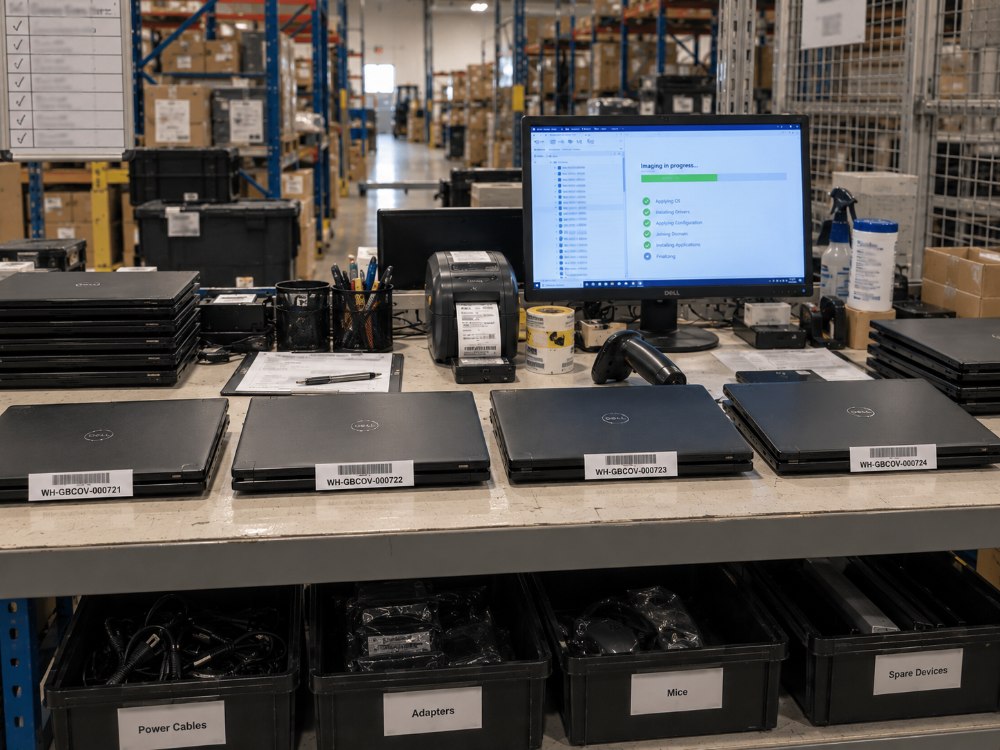
Device as a Service makes it one monthly line covering the whole life: the hardware, the zero-touch provisioning from our hubs, the management and security, the support and swap logistics, the mid-life refresh and the certified retirement with recovered value returned.
We will also compare it honestly against outright purchase. For some estates buying is still cheaper, and we would rather say so than win a subscription you regret.
What one per-device price contains
CapEx purchase versus DaaS
| OUTRIGHT PURCHASE | DEVICE AS A SERVICE | |
|---|---|---|
| Cash flow | Large capital outlay in one budget year | Level monthly operating cost per device |
| Refresh discipline | Slips when the budget year is difficult; fleet ages | Contracted into the subscription and planned from data |
| Disposal risk | Yours, including evidence and residual value | Ours, with a certificate per asset and value returned |
| Provisioning | Usually manual, per device, on arrival | Zero-touch from our hub, configured before dispatch |
| Spares and swaps | Bought reactively, often freighted | Hot spares in-country, swap logistics included |
| Estate visibility | A register that drifts from reality | Live asset record from purchase order to certificate |
| Invoicing | Capital plus scattered service and disposal costs | One monthly line per device, consolidated across countries |
Comparison shown at estate level. We will model both against your actual fleet, refresh history and support volumes rather than asserting a saving.
Joiner, mover, leaver - and back to the start
The loop closes commercially
Forecasting is driven by real data - device age, experience scores, failure patterns by model - so procurement is planned rather than reactive. Devices are staged and shipped from the hub in the country of use, deployed zero-touch, then operated with patching and experience monitoring.
When something fails, the swap comes from in-country stock rather than a freight booking. When a device reaches end of life it exits through certified disposal with a certificate per serial, and the recovered value is reported against the next cycle rather than absorbed by a disposal contractor.
That last point is what makes the model circular in practice rather than in a brochure: the money from the old fleet is visibly funding the new one.
One subscription, every country
A device programme that works in the head-office country and falls apart in the other eleven is the normal experience. Devices arrive late, get built to a local standard, and the estate diverges within a year.
Because we hold nineteen country entities with owned warehouses, devices are staged in-region and shipped locally to a single global build. The in-country entity acts as importer of record where you have no presence, so kit clears into local stock rather than sitting in customs while a joiner waits.
One subscription, one build standard, one asset record - with local employment, local language support and local spares behind it.
Cost and footprint, same decision
Quality-refurbished tiers
A genuine choice rather than a concession: professionally refurbished devices at a lower monthly price, with the same management, security, support and warranty position as new. Suits task-based roles and shared devices particularly well.
Buy-back and value recovery
Devices leaving the estate are graded and remarketed where value exists, with the agreed share returned and reported per batch. Nothing goes to disposal until reuse has been ruled out.
Reuse before recycle
The hierarchy is enforced in process, not stated as an aspiration: redeploy internally, then remarket, then recycle. Recycling is the last option because it recovers the least value and the least environmental benefit.
Reporting per estate
E-waste diverted and CO2 avoided reported per estate and per batch, so the programme contributes to your sustainability reporting instead of being an unexplained line in it.
Fix it before you feel it
DEX and proactive support
Digital experience monitoring scores what using each device actually feels like - boot and login times, application responsiveness, crash and hang rates, battery and disk health.
Fleet governance
The four numbers that tell you whether a device estate is under control, reported monthly and reviewed quarterly.
Fleet health
A comparable engagement
An organisation was buying devices per country, building them manually on arrival, and had no reliable fleet age profile. Leavers routinely kept hardware, disposal was handled by whichever local contractor was convenient, and there was no disposal evidence an auditor would accept.
The fleet moved onto a per-device subscription with a mix of new and quality-refurbished tiers by persona. Devices are now staged and shipped from the in-country hub with Autopilot or Apple Business Manager registration applied at purchase, managed through one UEM baseline, and monitored with experience scoring so degradation surfaces before tickets do.
Leavers are wiped on the leave date with the asset recovered through the hub, refresh is planned from health and age data rather than a calendar, and retirement produces a certificate per asset with recovered value reported against the next cycle. The estate age profile is a live report.
Anonymised by agreement. Client names available under NDA.
Questions buyers ask
Is there a minimum fleet size?
There is a practical floor rather than a hard rule - below roughly fifty devices the administrative overhead outweighs the benefit and we would recommend buying with our procurement and staging service instead. We will say so rather than sell a subscription that does not earn its keep.
Do you support mixed Windows and macOS estates?
Yes, and mobile alongside them. Management is through one UEM baseline covering Windows, macOS, iOS and Android, with policy sets per platform and per persona. Apple estates use Apple Business Manager for zero-touch in the same way Windows uses Autopilot.
Can we bring our existing fleet into DaaS?
Yes - fleet takeover is a standard entry route. We audit the estate, grade what has usable life, enrol it into management, and set a refresh pipeline for what does not. Devices with no remaining life go straight into certified disposal with recovered value credited against the programme.
What happens at the end of the term?
Options are agreed at signature rather than left open: extend on the existing devices at a reduced rate, refresh into a new term, or exit with the devices retired through our ITAD line. If you want to buy the fleet at term end, the price basis is set in the contract so it is not a negotiation from a weak position.
How good is a quality-refurbished device really?
They are professionally refurbished, functionally tested and cosmetically graded, carry the same warranty position and swap entitlement as new devices in the subscription, and are managed and secured identically. The honest limits are cosmetic grading and generation - a refurbished tier is a generation or so behind, which suits task-based and shared use better than engineering or creative roles.
Want the fleet off your balance sheet and under control?
Tell us the device count, the countries and the personas. We will model DaaS against outright purchase on your own numbers.